Introduction
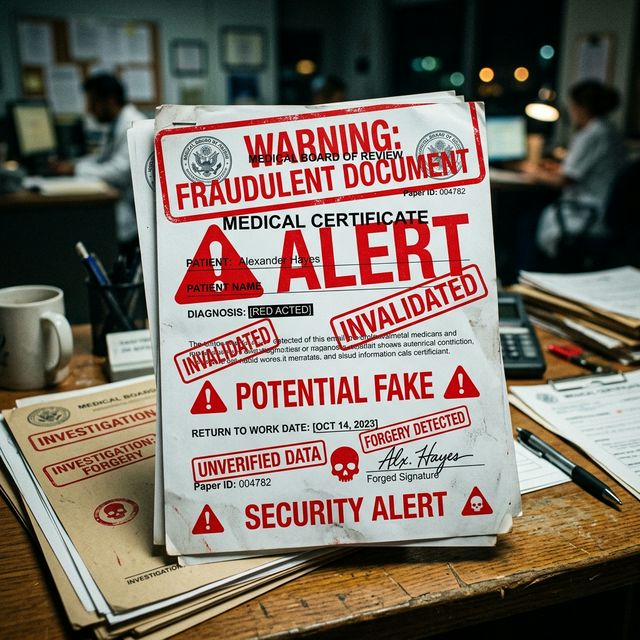
Fever is the most common reason people seek a medical report in India. It is also, unfortunately, one of the most frequently cited diagnoses on fake medical reports. Students missing exams, employees wanting an extra day off, and individuals avoiding professional commitments often search for a fake medical report showing fever.
This guide explains what such reports are, how they are typically created, why they are risky, and — most importantly — what legitimate options are available to you.
What Is a Medical Report Sample for Fever?
A fake medical report for fever is any document that falsely certifies a person as having a febrile illness (fever) without an actual clinical examination. These documents typically include:
- Fabricated patient name and dates
- False diagnosis of "fever" or "viral fever"
- A copied or forged doctor's signature
- A fake or stolen clinic name/address
- A made-up or stolen registration number
How Are Fake Fever Reports Created?
Common methods include:
- Editing an old genuine certificate in image editing software
- Using online certificate generators with false information
- Downloading and filling in pre-made certificate templates
- Purchasing from vendors on messaging apps or social media
Using a fake medical report for fever is a criminal offence. Under IPC Section 465, forgery carries up to 2 years imprisonment. Under Section 420 (cheating), penalties extend to 7 years. Being caught can result in termination, expulsion, FIR, and a permanent criminal record.
How Are Fake Fever Reports Detected?
Both employers and educational institutions have become increasingly sophisticated at detecting fraud:
- Phone verification — Calling the listed clinic to confirm the visit
- Online MCI database check — Verifying the doctor's registration number is real and active
- Document forensics — Looking for signs of digital editing (inconsistent fonts, pixel artefacts)
- Repeat pattern detection — HR teams notice when the same certificate format appears multiple times
- Cross-checking dates — If an employee was seen active on social media or badge-scanned during the claimed illness period
How to Get a Real Fever Certificate Quickly
Getting a genuine fever certificate is much faster than most people think:
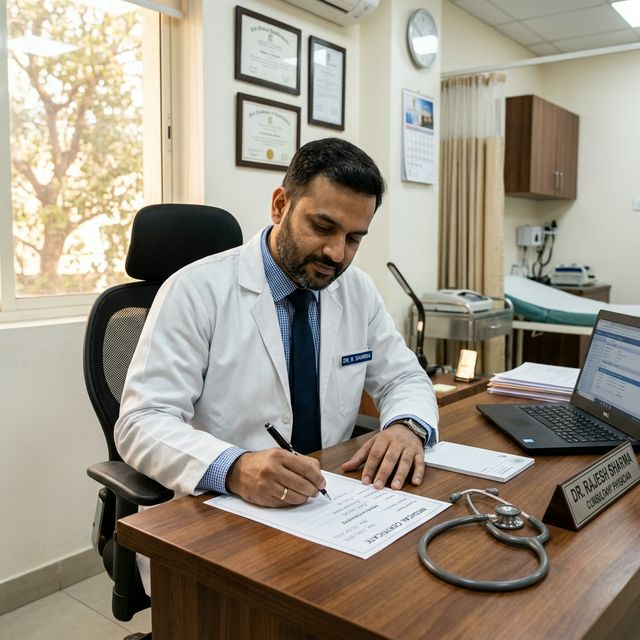
- Telemedicine (30 minutes) — Apps like Practo, Apollo 24/7, and mFine allow video consultations. A doctor can examine your symptoms, confirm fever, and issue a valid digital certificate within 30 minutes
- Walk-in clinic (1–2 hours) — Most private clinics see walk-in patients without appointments
- Government hospital OPD (free) — OPD fever consultations are free at government hospitals
Use a Legal Fever Certificate Template
Generate a professional reference template to show your doctor the required format.
Generate Medical Report Free →Clinical Terms for Fever on Medical Reports
For reference, here are the formal clinical terms doctors typically use for fever:
- Acute febrile illness — Standard term for recent-onset fever
- Viral pyrexia — Fever caused by a viral infection
- Pyrexia of unknown origin (PUO) — Fever without confirmed cause
- Acute viral upper respiratory tract infection with pyrexia — Fever with cold/flu symptoms
Frequently Asked Questions
Yes. Creating, using, or submitting any fake medical report — including for fever — is illegal under IPC Sections 465, 468, 420, and 193. Penalties range up to 7 years imprisonment.
Through telemedicine platforms, you can get a genuine, legally valid fever certificate within 30 minutes of a video consultation with a registered doctor.
Yes. Employers can call the clinic, verify the doctor's registration number on the MCI portal, and use document forensics tools to detect alterations.
Doctors typically use 'acute febrile illness', 'viral pyrexia', or 'pyrexia of unknown origin (PUO)' depending on the specific presentation.