Introduction
Despite the serious legal risks, fake medical certificates remain widely sought after. Understanding the motivations behind this behaviour — alongside the real consequences — is important for both individuals considering such a step and institutions trying to protect themselves from fraud.

Most Common Uses of Fake Medical Certificates
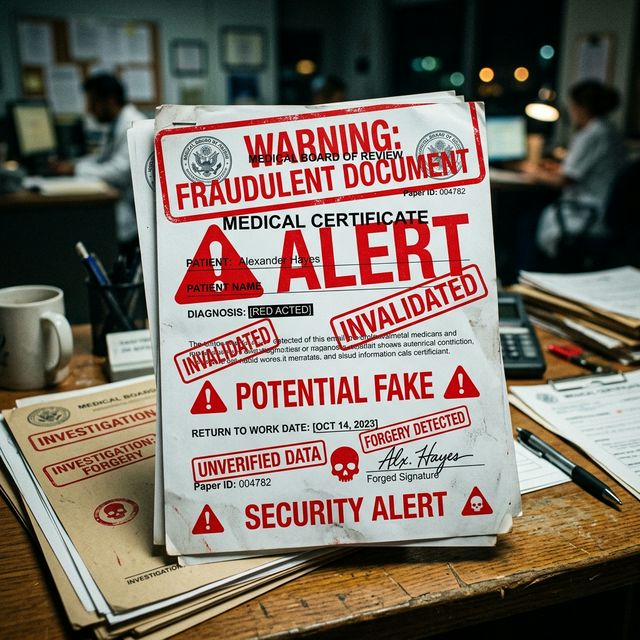
1. Sick Leave Extension
The most common use. Employees who have exhausted genuine sick leave, or who simply want extra time off, fabricate a medical certificate to justify additional absence. Many are not aware how easily these are detected by experienced HR teams.
2. Exam Exemption
Students across schools, colleges, and competitive exam centres submit fake medical certificates to reschedule exams, obtain re-tests, or avoid academic penalties for absence.
3. Insurance Fraud
One of the most serious uses. Individuals submit fake medical reports to claim health insurance benefits for illnesses that never occurred. Insurance companies have forensic teams specifically dedicated to detecting this.
4. Travel Exemption
Some fake fitness or medical certificates are used to claim special conditions during travel (e.g., airline seating upgrades, early boarding, baggage exemptions).
5. Avoiding Physical Fitness Tests
Candidates required to clear fitness tests for government jobs or sports competitions sometimes present fake fitness certificates showing they have passed when they have not.
The Hidden Risks Most People Ignore
Most people who use fake certificates believe they will not get caught. The reality: detection rates are increasing rapidly as verification systems improve. Here are the hidden risks.
- Digital trails — Social media activity, location data, and credit card transactions can contradict a claimed illness period
- Repeat patterns — Using the same fake clinic or doctor name multiple times is quickly noticed
- MCI portal checks — Registration numbers are publicly verifiable online in seconds
- Hospital callbacks — Major employers now routinely call hospitals listed on certificates
- Whistleblower reports — Colleagues who know you were not ill may report fraudulent leave claims
Legal Consequences in India
- IPC Section 465 — Forgery: up to 2 years imprisonment
- IPC Section 468 — Forgery for cheating: up to 7 years imprisonment
- IPC Section 420 — Cheating: up to 7 years imprisonment
- IPC Section 193 — False evidence: up to 3 years imprisonment
- Termination from employment with cause
- Permanent academic record damage
Use a Legitimate Template Instead
Our free tool generates reference templates for legal, ethical use only.
Generate Medical Certificate Free →The Smarter Alternative
Rather than risking a criminal record, use these legitimate options:
- Telemedicine — Real doctor, real certificate, 30 minutes
- Self-declaration — Many employers accept self-declaration for 1–2 day absences
- HR conversation — Many employers will accommodate genuine personal situations without requiring a medical certificate, especially for regular employees
Frequently Asked Questions
Yes. It falls under forgery, cheating, and false evidence provisions of the IPC. Penalties range from 2 to 7 years imprisonment depending on the specific offence.
Yes. Increasing numbers of employers — especially large corporates, government departments, and educational institutions — routinely verify medical certificates.
Telemedicine consultation via apps like Practo or Apollo 24/7. A video consultation takes 15–20 minutes and results in a genuine, legally valid certificate.
Companies can file a criminal complaint (FIR) and also pursue civil damages for losses caused by fraudulent leave claims.